Key Takeaways
Automated email sequences generate 320% more revenue than manual campaigns
while cutting operational costs by 30% (Landbase, 2026)
WordPress CRMs with built-in email automation eliminate the need for
separate ESPs and reduce data fragmentation
Multi-step sequences with proper timing see 21-25% open rates and
significantly higher engagement than broadcast emails
Segmented sequences based on behavior and conversation context deliver more
relevant messaging at scale
Email marketing remains the highest-ROI channel for customer nurturing. Yet most WordPress site owners juggle separate tools for CRM and email campaigns, creating data silos that fragment the customer journey. What if your CRM could handle sophisticated email sequences without expensive third-party subscriptions?
This guide shows you how to build automated email sequences directly within your WordPress CRM. You will learn the mechanics of multi-step campaigns, timing strategies that boost engagement, and segmentation tactics that make every message feel personal. By the end, you will have a clear blueprint for nurturing leads from first contact to loyal customer.
What Are Email Sequences in WordPress CRM?
Email sequences are automated series of messages triggered by specific contact actions or time-based rules. Unlike one-off broadcasts, sequences respond to behavior, delivering the right message at the right moment in the customer journey (Mailchimp, 2026). In a WordPress CRM context, these sequences tap directly into your contact database, order history, and conversation records.
A typical nurture sequence might include a welcome email immediately after signup, a value-driven educational message three days later, a case study one week in, and a soft offer after ten days. Each step advances the relationship without requiring manual intervention. The CRM tracks opens, clicks, and replies, adjusting the sequence flow based on engagement.
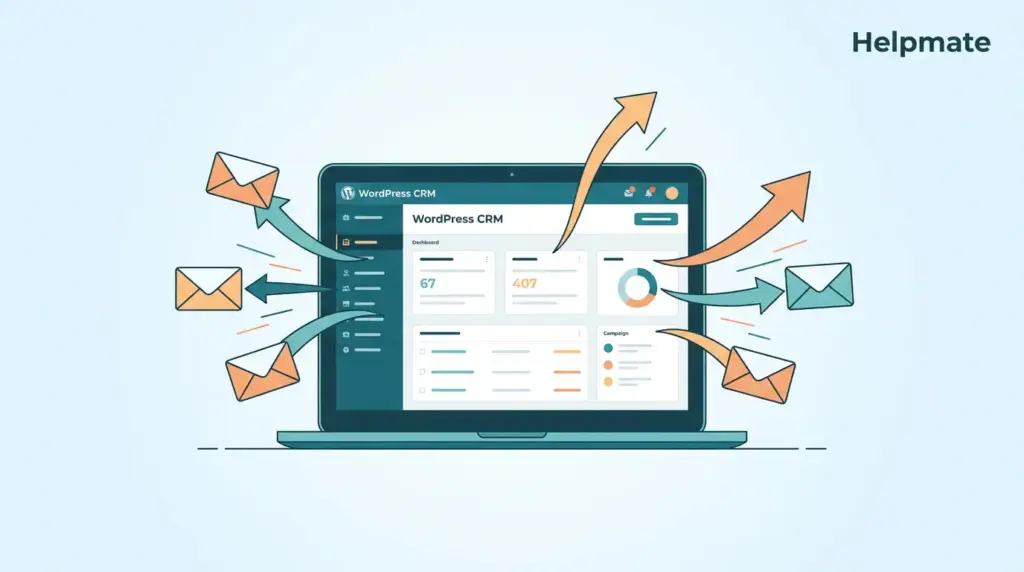
WordPress-native CRMs integrate email sequencing with your existing workflows. When a visitor fills out a form, sends a chat message, or makes a purchase, the CRM automatically enrolls them in relevant sequences. This unified approach means you do not export contacts to external platforms or sync data between disconnected systems. Everything happens where your customer records already live.
Why Do Email Sequences Outperform Manual Campaigns?
Automated sequences generate 320% more revenue than manual campaigns while reducing operational costs by 30% (Landbase, 2026). The efficiency gains come from timing precision and consistent execution. Manual campaigns depend on someone remembering to send messages. Sequences fire automatically based on triggers you define once.
Beyond efficiency, sequences excel at relationship building. A well-designed nurture sequence delivers value before asking for anything in return. This builds trust gradually. Contacts who receive educational content over time convert at higher rates than those hit with immediate sales pitches. Email marketing delivers an average return of $36 for every $1 spent, and sequences maximize that return through systematic follow-up (Landbase, 2026).
The data tells a clear story. Sequences with 5-7 emails see higher overall conversion than single-send campaigns. Each message reinforces your brand and moves the contact closer to a decision. When combined with CRM data like past purchases or conversation history, sequences become genuinely personalized rather than merely automated.
How Do You Build Your First Email Sequence?
Building an effective sequence starts with defining the goal. Are you nurturing new leads, onboarding customers, recovering abandoned carts, or re-engaging inactive contacts? The goal determines the message content, timing, and success metrics. Start with one clear objective rather than trying to accomplish everything in a single sequence.
Next, map the contact journey. Identify the trigger that enrolls someone in the sequence. This could be a form submission, a tag assignment, a purchase event, or a specific behavior like visiting a pricing page. Then outline the sequence steps. Most effective nurture sequences include 4-6 emails spread across 2-3 weeks. Each email should deliver distinct value while advancing toward your goal.
Write your emails with a single focus per message. The first email sets expectations. The middle emails deliver value, share stories, or address objections. The final emails present clear calls to action. Use merge tags to personalize subject lines and content with contact names, company details, or past interaction data from your CRM. Personalization lifts open rates by 26% on average (Campaign Monitor, 2026).
What Timing Works Best for Email Sequences?
Timing separates effective sequences from ignored noise. Send the first email immediately after the trigger action while your brand is fresh in the contact’s mind. Delay the second email by 2-3 days to avoid overwhelming new subscribers. Subsequent emails typically space 3-5 days apart, though this varies by audience and intent.
Industry benchmarks show average open rates of 21-25% for automated sequences, with variations by sector and audience quality (CodeCrew, 2026). Testing reveals your optimal timing. Try different send times and intervals, then measure open rates, click rates, and unsubscribes. Most WordPress CRMs provide analytics showing exactly when contacts engage with your messages.
Consider the customer lifecycle stage. New subscribers tolerate more frequent communication than long-term contacts. B2B sequences often work best on Tuesday through Thursday mornings. B2C sequences may perform better on evenings or weekends. Your CRM’s engagement data should guide these decisions rather than generic best practices.
How Can You Segment Audiences for Better Results?
Segmentation transforms generic broadcasts into relevant conversations. Rather than sending the same sequence to everyone, divide your audience based on behavior, demographics, purchase history, or engagement level. Segmented campaigns drive 14.31% higher open rates than non-segmented campaigns (Mailchimp, 2026).
Start with high-impact segments. Separate new subscribers from existing customers. Split audiences by the product or content that initially attracted them. Tag contacts based on website behavior like pricing page visits or content downloads. Your WordPress CRM captures this data automatically when integrated with your site.
Create specific sequences for each segment. New subscribers receive welcome and education sequences. Trial users get feature highlight sequences. Lapsed customers see win-back campaigns. The more relevant the message, the higher the engagement. CRMs with conversation history can further personalize based on past support interactions or chat transcripts.
What Advanced Tactics Boost Sequence Performance?
Beyond basic automation, advanced tactics multiply sequence effectiveness. Conditional logic changes the sequence path based on contact actions. If someone clicks a link in email two, skip email three and send a more advanced follow-up instead. If they do not open the first email, retry with a different subject line after 48 hours.
Behavioral triggers add sophistication. Abandoned cart sequences recover 10-15% of otherwise lost sales by reminding shoppers of items left behind. Post-purchase sequences drive reviews and repeat purchases. Re-engagement sequences wake up dormant subscribers before they churn completely. Each trigger responds to specific contact behavior in real time.
AI-driven automation is reshaping email marketing inside WordPress in 2026, making campaigns faster to create, more personalized, and highly effective (Next3Offload, 2026). Modern CRMs use engagement scoring to identify hot leads, then automatically escalate them to sales sequences or live chat handoff. This intelligent routing ensures your team focuses attention on contacts most likely to convert.
How Do You Measure Sequence Success?
Measurement turns intuition into improvement. Track open rates to gauge subject line effectiveness. Monitor click rates to assess content relevance. Measure conversion rates to determine overall sequence ROI. Unsubscribe rates indicate when you are sending too frequently or missing the mark on relevance.
Benchmark your performance against industry standards. Average email open rates in 2026 range from 21-25% depending on calculation methodology, with click rates around 2-3% (Klaviyo, 2026). Sequences typically outperform broadcasts because they are more targeted. If your open rates fall below 15%, review your subject lines and list hygiene. If click rates lag, improve your call-to-action clarity.
Connect sequence metrics to business outcomes. Track revenue attributed to each sequence. Measure customer lifetime value differences between sequenced and non-sequenced contacts. Calculate cost per acquisition for leads generated through nurture campaigns. Your WordPress CRM should report these numbers in unified dashboards rather than forcing you to cobble together data from multiple tools.
Frequently Asked Questions
Most effective nurture sequences contain 4-6 emails delivered over 2-3 weeks. This provides enough touchpoints to build trust without overwhelming subscribers. Shorter sequences work for simple offers, while complex B2B sales may require 8-10 emails over a month. Test length against your specific audience engagement data to find the optimal balance.
Yes. Modern WordPress CRMs like Helpmate include built-in email sequencing capabilities. This eliminates the need for separate ESP subscriptions and keeps all customer data in one place. You maintain full control over your contact list without syncing issues or platform restrictions. Your WordPress hosting handles deliverability when properly configured with SPF and DKIM records.
Abandoned cart sequences recover 10-15% of otherwise lost sales by reminding shoppers of items left in their cart. The first email typically sends within an hour, followed by reminders at 24 hours and 72 hours. Including product images, customer reviews, and limited-time discounts increases recovery rates significantly. These sequences address the 70% of carts abandoned before purchase.
Campaigns are one-time broadcasts sent to a group of contacts simultaneously. Sequences are automated series triggered by specific actions or time delays, with each contact moving through at their own pace. Campaigns work for announcements and promotions. Sequences excel at onboarding, nurturing, and behavior-based follow-up. Effective email marketing uses both strategically.
CRM integration provides access to complete contact histories, including past purchases, support conversations, website behavior, and engagement patterns. This data enables dynamic content insertion, behavioral triggers, and intelligent segmentation. Emails can reference specific products viewed, past conversation topics, or support issues resolved. Personalized emails using CRM data achieve 26% higher open rates than generic messages (Campaign Monitor, 2026).
Average open rates for automated sequences range from 21-25%, depending on industry and audience quality (CodeCrew, 2026). Sequences typically outperform broadcast campaigns because they are triggered by specific actions and expected by recipients. Welcome sequences often see 40-50% open rates on the first email. If your sequence open rates fall below 15%, review your subject lines, sender reputation, and list quality.
Helpmate provides multi-step email sequences integrated directly with your WordPress CRM. You can create automated workflows triggered by form submissions, chat conversations, or user actions. Sequences work alongside conversation tracking, giving you complete context for each contact’s journey.
Conclusion
Email sequences represent one of the highest-leverage activities in digital marketing. When built within your WordPress CRM, they eliminate tool fragmentation while delivering the personalization modern customers expect. The statistics are clear: automated sequences generate 320% more revenue than manual campaigns and deliver exceptional ROI.
Your next steps are straightforward. Audit your current email approach. Identify one sequence that would most impact your business, whether welcome series, abandoned cart recovery, or post-purchase follow-up. Build it using the framework outlined here. Test timing and messaging. Then expand to additional sequences as you refine your approach.
The tools now exist to run sophisticated email automation directly from WordPress. Your customer data, conversation history, and email sequences can finally live in one cohesive system. Start building sequences that nurture relationships and drive growth without managing multiple subscriptions or wrestling with data sync issues.