TL;DR: Car buyers increasingly prefer Messenger over phone calls, and dealerships that respond to messaging leads within five minutes are nearly seven times more likely to qualify the prospect (Harvard Business Review). Capturing leads from Facebook Messenger lets you automate qualification, route hot prospects instantly, and centralize every conversation in one CRM.
The average car buyer now sends more messages than emails before they ever step onto a lot. A lot of dealerships still treat Facebook Messenger like a casual inbox instead of a revenue channel. Messages pile up. Somebody checks them when they remember. Response times stretch into hours, and by then, hot prospects have cooled off and bought elsewhere.
This is fixable. We have watched dealerships flip their Messenger completely by capturing leads from Facebook Messenger for car sales using AI automation built for dealerships that qualifies buyers, collects key details, and routes serious shoppers straight to the sales team.
Explore Helpmate’s car dealer AI solution to start capturing qualified Messenger leads today.
Why Do Car Buyers Use Facebook Messenger?
Car buyers gravitate toward Messenger mostly because it feels immediate without the pressure of a phone call. Meta says roughly a billion people use the platform monthly, and automotive shoppers—especially on mobile—tend to start these conversations after hours while they are browsing inventory. It basically extends the lot onto their couch. We have seen shoppers message three dealers at once from the sofa during a commercial break.
Local Marketplace browsing feeds into this heavily. Someone clicks a vehicle listing ad, sees the Messenger button, and suddenly they are in a conversation without the friction of a cold call. That instant access removes the hesitation that comes with dialing a dealership. No phone tag. No voicemails. Just a quick question about mileage or interior photos, sent during a lunch break or while waiting in line. The asynchronous back-and-forth fits real life.
Younger buyers especially treat messaging as the default. Millennials and Gen Z often experience actual phone anxiety. Offering Messenger signals you respect how they actually communicate. There is also a privacy layer—some buyers simply are not ready to hand over a phone number to a static web form. Messenger lets them ask questions inside a platform they already trust, which keeps the conversation moving instead of killing it at the gate. Automotive research happens in these fragmented moments. A parent browses SUVs while watching television and messages three dealers from the couch. If your dealership responds instantly with pricing and next steps, you insert yourself into that decision loop before competitors even wake up. Dealerships that treat Messenger as a primary channel rather than some social side project consistently report higher show rates and faster appointment bookings.
What Makes Facebook Messenger Different from Other Lead Channels?
Messenger is not just another contact form. It hits different than email. Open rates for messaging campaigns routinely outperform email by wide margins, and response times are measured in minutes rather than days. When a shopper submits a website form, your follow-up competes with a hundred other unread emails. When you reply in Messenger, you land in the same place they chat with friends and family. That context shift alone increases attention.
The channel also supports rich media natively. A shopper can send a screenshot of a vehicle they saw on the street, share a VIN, or upload a trade-in photo mid-conversation. That context travels with the lead, so your sales team sees the full picture before the first human reply. You cannot attach a photo to a traditional lead form with the same fluidity. Video walkarounds from the sales rep can live in the same thread too, creating a multimedia experience that builds trust remotely.
Conversation continuity is another advantage. Unlike a website form that fires once and disappears, Messenger threads persist. You can return to a lead three days later with a price update or financing option, and the history stays intact. That persistence turns single inquiries into ongoing relationships. A customer who asked about a truck last month can be re-engaged when a similar unit arrives on the lot. No other lead channel preserves context so effortlessly.
The notification itself changes behavior. Messenger pings a phone with the same urgency as a text from a friend. That immediacy drives faster replies from both sides. For dealerships, this means less time waiting for callbacks and more time moving shoppers through financing applications and trade evaluations. The result is a shorter sales cycle and fewer ghosted conversations.
How Do You Set Up Facebook Messenger Lead Capture for Your Dealership?
The setup is less complicated than most dealers expect. You start by connecting your Facebook Page to a centralized inbox. In Helpmate, head to Channels and authorize your dealership’s Page through the OAuth flow. Once that is live, the platform pulls in Messenger threads alongside website chat and whatever else you have running. You stop hopping between apps just to see who contacted you. Everything arrives in one unified inbox.
Next, turn on lead collection inside the chat behavior settings. You decide which fields to request. Name and phone number are non-negotiable for car sales. You can also grab preferred vehicle type, budget range, and purchase timeline. Helpmate stores these as CRM contacts automatically, so nothing gets lost in a social silo. Every Messenger conversation becomes a trackable opportunity with a creation date and source tag. Your BDC manager can finally see how many leads came from Messenger versus the website widget.
Training the bot comes next. Use the Knowledge Base to feed the AI your inventory pages, financing FAQ, and trade-in policies. When a shopper asks about APR rates or SUV availability at 11 PM, the bot answers from your content instead of pulling generic scripts out of thin air. This keeps responses accurate and on-brand while your team is off the clock. You do need to update the Knowledge Base when new vehicles arrive or incentive programs change. Stale answers about sold units damage credibility faster than silence.
You should also set availability expectations. If live agents only cover business hours, let the bot collect lead details overnight and promise a morning callback. Shoppers actually appreciate knowing exactly when a human will follow up. Plus, the captured data means that callback is informed and productive. Test everything in the Test Chatbot sandbox before going live. Double-check Page permissions, and make sure the greeting sounds like your dealership, not a robot.
How Does Automated Qualification Work in Messenger?
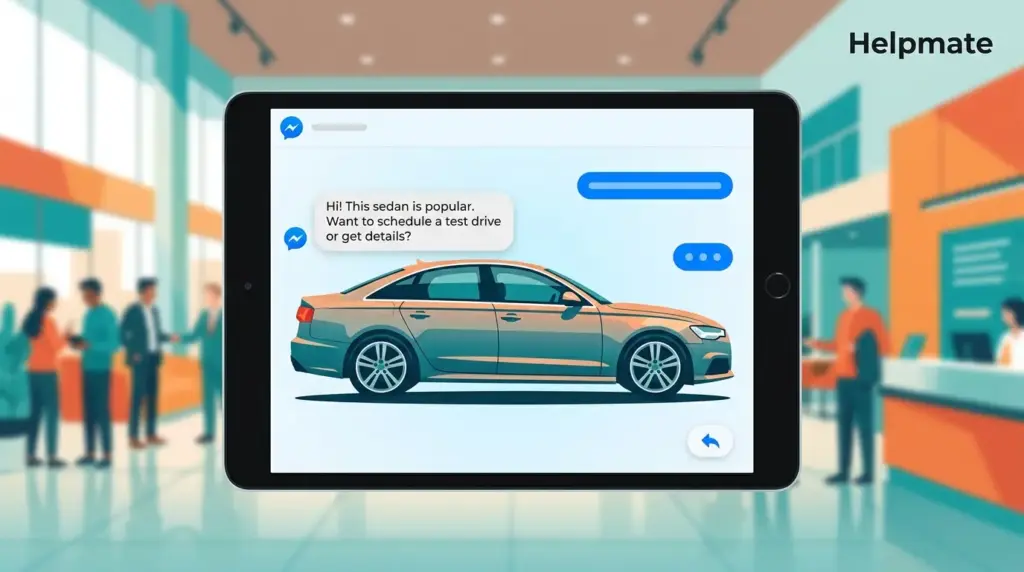
Qualification works best when it does not feel like a form. Instead of forcing shoppers through a wall of fields, the bot asks one question at a time. It might start with “What vehicle are you interested in?” followed by “When are you hoping to buy?” and “Will you need financing?” This chat-based approach mirrors how people already use the app, so participation rates stay high. The interaction feels like texting a sales associate rather than completing a survey.
Each answer updates the lead profile in real time. Helpmate assigns tags based on responses, so your CRM segments shoppers by intent. Someone who selects “this week” and “yes, financing” receives a hot-lead tag, while a browser six months out enters a long-term nurture sequence. You can also set negative qualifiers. If a shopper needs a specific make you do not carry, the bot can politely say so and suggest alternatives, saving both parties time. Conditional branching lets you ask follow-up questions based on previous answers.
This automation protects your sales team from chasing cold inquiries. Reps spend time on buyers who have budget, timeline, and model preference already confirmed. The bot handles the repetitive fact-finding, and human agents step in only when the conversation requires empathy or negotiation. Managers can review qualification data in analytics to see which Messenger campaigns produce the most ready-to-buy traffic. That visibility helps you optimize ad spend and inventory focus.
The qualification flow also helps you spot patterns. If most Messenger leads ask about electric vehicles, you might adjust inventory acquisition. If financing questions dominate, you can train the bot to explain lender partnerships more thoroughly. The data becomes a feedback loop for both marketing and operations. When connected to appointment scheduling, a qualified lead can book a test drive slot without leaving the Messenger thread.
What Data Should You Collect from Messenger Leads?
You really only need a handful of fields to make this work. Full name, phone number, email, preferred vehicle category, and purchase timeline. Those five data points give your sales team enough context to prioritize and personalize follow-up. Phone number is still the big one—voice closes most automotive deals. Email supports long-term nurture and document sharing. Vehicle category helps your floor team prep the right units before the shopper even walks in.
Avoid over-collecting. Every additional field increases drop-off. In Messenger, the best experiences feel like chats, not interrogations. If you need credit range or trade-in details, ask after the shopper has received some value, like a financing estimate or vehicle recommendation. Timing matters. Ask for the phone number once the shopper sees that your dealership actually has the model they want. Premature demands for sensitive data kill momentum.
Helpmate allows custom fields on contacts, so you can store VIN interest, preferred contact time, or co-buyer status without cluttering the initial flow. Map these fields in the integration settings, and the data flows directly into the CRM contact record. Clean data entry becomes automatic rather than a weekend spreadsheet marathon. Your BDC manager can export segments by vehicle interest and hand targeted lists to the sales floor.
Data quality also improves when collection is conversational. If a bot asks “What is the best number to reach you?” inside a natural thread, shoppers comply more willingly than when staring at a blank form. The context of conversation lowers resistance. Just be sure to mention compliance with local privacy regulations and include an opt-out path for marketing messages. Respect builds long-term customer relationships.
How Do You Route Messenger Leads to Your Sales Team?
Speed defines conversion. A landmark Harvard Business Review study found that firms contacting leads within an hour were nearly seven times as likely to qualify the lead as those who waited even one hour. In car sales, that window is even tighter. Messenger creates an expectation of chat-like immediacy. If your team cannot respond in minutes, automation has to bridge the gap. The first reply is often the only one that matters.
Helpmate handles this with instant routing rules. When a lead hits a specific score or requests human help, the system assigns the conversation to an available sales rep and triggers a notification via email or inside the unified inbox. If your team uses a specific rotation, you can configure assignment logic so no single rep becomes a bottleneck. New leads can round-robin across your floor team, while returning customers route to their original agent. Mobile notifications mean reps can claim leads even when away from their desk.
Live handoff is also available. When the bot detects a high-intent signal, like “I want to schedule a test drive today,” it can pause automation and flag the thread for immediate human takeover. The rep sees the full conversation history, the captured lead data, and the shopper’s original Facebook profile name. There is no need to ask the customer to repeat information. That seamless transition from bot to human feels premium and protects the relationship. It also shortens the sales cycle because the rep enters the conversation fully informed.
For after-hours coverage, routing rules can escalate to a BDC team member on call, or simply queue the lead for first-contact priority the next morning. Either way, the lead record exists in the CRM the moment the conversation starts. Nothing falls through the cracks. You can set service level agreements inside your process so that every Messenger lead receives a human touch within a timeframe you define.
What Are Common Mistakes When Capturing Messenger Leads?
Most dealers mess this up in a few predictable ways. The biggest one is treating Messenger like email. Buyers expect conversational speed. If your dealership checks Messenger once a day, you are basically telling prospects to shop elsewhere. Automation exists to maintain immediate presence around the clock. Set up Auto DM and lead capture so every message triggers an instant acknowledgment and qualification sequence. Read receipts tell shoppers exactly when you saw their message. Ignoring them for hours destroys trust.
Another failure point is keeping Messenger leads outside your CRM. When leads live only inside Facebook, you cannot segment, nurture, or report accurately. Your sales manager loses visibility, and follow-up becomes inconsistent. Centralizing Messenger leads inside Helpmate fixes this by design. All sources feed one contact database. You can compare Messenger lead quality against website chat and phone ups in a single analytics view.
A third pitfall is neglecting bot training. If the AI answers inventory questions with generic responses, shoppers disengage. Feed the Knowledge Base real pages, real pricing, and real policies. Update training content whenever your inventory or promotions change. Stale answers about sold units damage credibility faster than no answer at all. Schedule a monthly review of top bot questions to identify knowledge gaps.
Another common error is asking for too much too soon. Dealers sometimes push for full credit applications inside the first Messenger exchange. That heavy hand kills momentum. Lead capture should match the temperature of the conversation. Earn the right to deeper data by providing value first. Share a payment estimate or confirm availability before requesting a social security number.
Finally, many dealers forget to enable after-hours capture. A significant percentage of automotive research happens at night and on weekends. If your Messenger inbox is unmanned during those hours, you are missing prime opportunities. Automation ensures every after-hours message becomes a captured lead by morning, complete with qualification details and contact information. The dealerships that win are the ones that never fully sleep.
Frequently Asked Questions
Yes. Helpmate is built as a no-code interface. You can connect your dealership’s Facebook Page, turn on automated lead capture, and set up conversation flows without writing a single line of code.
Research from Harvard Business Review shows that responding within one hour makes you nearly seven times more likely to qualify a lead than waiting longer. In practice, five minutes is the standard most shoppers actually expect from messaging channels.
Use a short conversational flow that asks about vehicle interest, purchase timeline, and financing needs. Helpmate tags leads automatically based on answers, so your team can see who is actually ready to buy.
Yes. Helpmate includes a built-in CRM. Messenger contacts, conversation history, and custom fields sit right alongside leads from your website and other channels.
Yes. When the Appointments module is active, the bot can offer available time slots and create bookings directly inside the Messenger conversation.
You can start with Helpmate – Live, Social & AI Chat with Built-in CRM from the WordPress.org plugin directory. The free version covers core chat and lead capture, with advanced automation and CRM upgrades available when you are ready.
Inside the Helpmate admin, go to Channels, select Facebook, and follow the OAuth flow to authorize your Page. Once connected, Messenger conversations show up in your unified inbox.
Conclusion
Capturing leads from Facebook Messenger for car sales is not optional anymore if you want to stay competitive. The channel offers higher engagement, richer context, and faster response potential than traditional forms. If you want to win here, you need immediate automation, smart qualification, and tight CRM integration. That is really it.
- Car buyers prefer Messenger because it is fast, private, and mobile-friendly.
- Response speed directly correlates with qualification rates.
- Automated qualification keeps your sales team focused on ready buyers.
- Integrating Messenger with your CRM prevents lead loss and data silos.
- Training your bot with real inventory and policy content improves trust.
Start by connecting your Facebook Page to a centralized platform, configure your lead capture fields, and let automation handle the first five minutes of every conversation. Your sales team will thank you, and your leads will convert faster.
Get started with Helpmate’s AI for car dealers and turn every Messenger conversation into a sales opportunity.