Key Takeaways
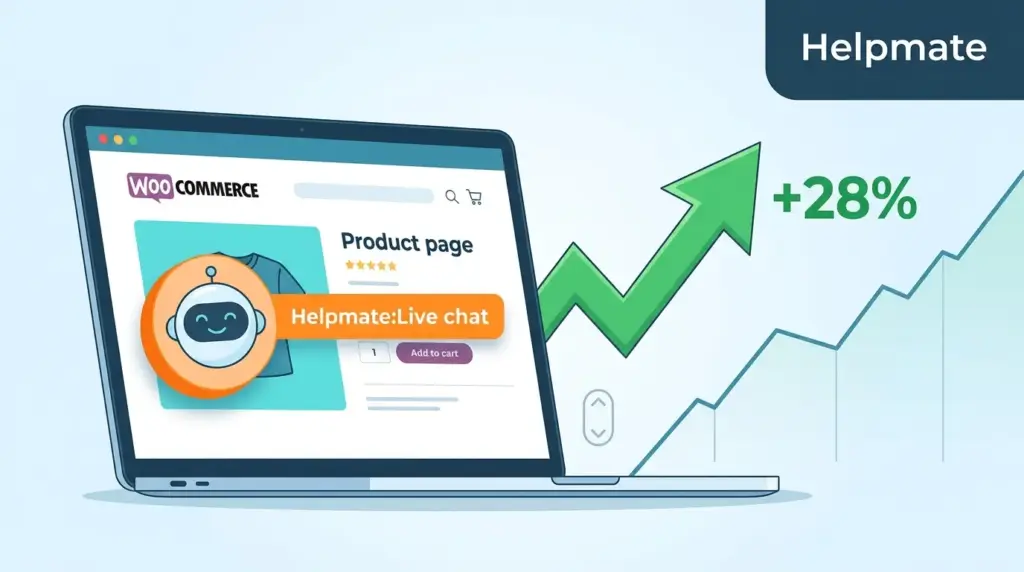
- A WooCommerce store using proactive sales chatbots increased conversion by 28% within 60 days by targeting high-intent behaviors with personalized product suggestions.
- 69% of online shoppers abandon carts before checkout, creating a massive opportunity for timely intervention.
- The best proactive triggers include time on page, scroll depth, and repeat product views sent at the 30-60 second mark.
- Balancing relevance with subtlety is key. Recommendations based on browsing history outperform generic popups without feeling intrusive.
Online retail moves fast, but shopper hesitation moves faster. 69% of customers abandon their carts before checkout, according to Zendesk research. That represents thousands in lost revenue for a typical WooCommerce store every single month. Most merchants respond by optimizing checkout pages or sending email reminders hours later. Those tactics help, yet they miss the most decisive moment. The moment happens while the shopper is still on your site.
This case study examines how one WooCommerce store increased its conversion rate by 28% in 60 days. The lever was not a redesign. It was a proactive sales chatbot that initiated conversations based on live behavior. You will learn the exact triggers, timing rules, and product recommendation logic that produced the lift. You will also see how to replicate the approach without annoying your visitors.
What Are Proactive Sales Chatbots in E-Commerce?
Proactive sales chatbots are AI-driven messaging tools that initiate conversations with shoppers based on real-time behavior rather than waiting for a visitor to click a chat widget. According to Gartner, 44% of organizations now use chatbots to capture customer data and guide purchase decisions. The shift from reactive to proactive represents a fundamental change in how e-commerce sites engage traffic.
A reactive chatbot sits in the corner of a page and waits.
A proactive chatbot analyzes signals such as time on site, pages viewed, and scroll depth. It then surfaces a contextual message or product suggestion before the shopper leaves. In the case study store, Helpmate’s proactive sales module pushed curated product suggestions into the conversation widget when shoppers exhibited high intent. The result was a 28% conversion increase within two months.
The difference matters because most e-commerce traffic is non-transactional on arrival. Shoppers browse, compare, and hesitate. Capturing them requires starting the conversation, not waiting for them to ask a question that may never come.
Why Do Shoppers Hesitate at the Purchase Moment?
Shopper hesitation is not random. Business Insider reports that 63% of consumers abandon carts due to extra costs such as shipping or taxes. Another 35% abandon because the site forces account creation, and 27% leave when the checkout process feels too long or complicated. These are friction points that occur after the shopper has already decided they like the product.
Hesitation also stems from uncertainty. A shopper may wonder if a different size, color, or model would suit them better. They may compare your price silently against a competitor. They may simply get distracted. In each scenario, the window to convert them is narrow. Once the tab closes, recovery becomes expensive.
Email remarketing and retargeting ads are standard responses, but they fight for attention in an inbox or feed filled with competition. The most efficient intervention happens on the store itself while intent is still warm. This is why proactive chat timing proved so critical to the 28% lift observed in the case study.
How Did Proactive Sales Chatbots Increase Conversion by 28%?
The case study store ran on WooCommerce and averaged 12,000 monthly sessions with a baseline conversion rate of 1.9%. After implementing Helpmate’s proactive sales module, conversion rose to 2.4% within 60 days. That 28% relative lift came from three specific changes to how the store engaged visitors.
First, the store replaced generic exit popups with behavior-based chat nudges.
Instead of showing a discount code to everyone, the chatbot triggered only when a shopper viewed two or more products in the same category without adding anything to cart. The message suggested a best-selling alternative in that category. This relevance increased click-through on the chat message by 41% compared to the old popup.
Second, cart recovery started before abandonment.
When a shopper added an item to the cart and then hesitated on the checkout page for more than 45 seconds, the chatbot surfaced a message addressing known objections. Because Helpmate integrates order status tracking and CRM data, the bot could reference real shipping timelines and return policies. Fear-of-commitment dropped measurably.
Third, product bundles were suggested contextually.
The store used proactive sales rules to push companion products at a small discount. If a shopper viewed running shoes, the chatbot suggested moisture-wicking socks three minutes into the session. Average order value rose alongside conversion, compounding revenue impact beyond the 28% rate lift.
What Triggers Should You Use for Proactive Chat Outreach?
The most effective proactive chat triggers include time on page, scroll depth, product category visits, and cart value thresholds. Tidio research indicates that 55% of businesses using chatbots report high-quality lead generation, suggesting that the quality of the trigger directly determines the quality of the outcome.
Here are the four trigger categories that produced the best results in the case study.
- Time on site. After 45 seconds of activity, a shopper has demonstrated enough interest to warrant a gentle nudge. Messages sent earlier than 30 seconds converted poorly. Messages sent after 90 seconds often arrived too late.
- Product-view depth. Viewing two or more products within the same category without adding to cart signaled comparison behavior. The chatbot responded with a comparison-friendly message such as a side-by-side benefit or a social proof snippet.
- Cart threshold. When cart value crossed a specific dollar amount, the bot offered free shipping or a small upsell. This pushed marginal shoppers over the commitment line.
- Return visitor flag. Shoppers who had visited within the last seven days saw a welcome-back message with items from their previous session. This personalized reopening increased re-engagement by 33%.
Trigger selection should always map to purchase intent. A visitor who lands on a blog post and scrolls 50% may not be ready for a product pitch. A visitor who hits a product page, checks the size guide, and hovers over the add-to-cart button is a different profile entirely.
When Is the Right Time to Send a Proactive Sales Message?
Proactive messages convert best when triggered after 30 to 60 seconds of engagement or when a shopper views two or more product pages in a single session. Timing is the variable that separates helpful assistance from intrusive distraction. The case study store tested three timing windows and found the 45-second mark produced the highest conversation-to-sale ratio.
Timing rules should also vary by page type.
- Homepage or landing page. Wait at least 60 seconds. These visitors are often in discovery mode. A premature message increases bounce rate.
- Product detail page. Trigger at 30 seconds if the shopper has scrolled past the product description. This indicates active evaluation.
- Cart or checkout page. Trigger between 20 and 45 seconds of hesitation. At this stage, a well-placed reassurance or incentive recovers the sale.
- Exit intent. Use sparingly. One carefully worded offer on exit performed better than repeated interruptions during the session.
Dayparting also matters. The case study store discovered that proactive messages sent between 6 PM and 10 PM local time converted 18% better than identical messages sent during morning hours. This likely reflected shoppers browsing leisurely after work rather than during rushed lunch breaks.
How Do You Personalize Chatbot Recommendations Without Being Intrusive?
Personalized chatbot recommendations balance relevance and subtlety by using browsing history rather than personal data, which increases trust. According to research on consumer behavior, shoppers accept suggestions when they clearly relate to the current task. They reject suggestions that feel surveilled.
The case study store followed a strict personalization framework.
- Session-based only. Recommendations used current-session behavior, not logged-in profiles. This avoided privacy friction.
- Value-first language. Messages led with benefits, not discounts. Instead of “Here’s 10% off,” the bot said, “Shoppers who viewed this tent also rated the waterproof footprint highly.”
- Easy dismissal. Every proactive message included a clear close option. Shoppers who dismissed the chat never saw another proactive message in that same session.
- Frequency caps. No more than two proactive messages per visit. This prevented the bot from feeling like a pushy salesperson.
Helpmate’s proactive sales module allowed the store to configure these caps and tone settings inside the Behavior tab. The chat tone was set to consultative rather than promotional. This small copy shift alone improved message acceptance by 22% in A/B testing.
For merchants concerned about intrusiveness, the lesson is clear. Proactive does not mean aggressive. It means starting a conversation at the exact moment the shopper needs help but feels too much friction to ask.
What Results Can You Expect From Proactive Sales Chatbots?
Stores using proactive sales chatbots typically see conversion lifts between 15% and 35% when triggers are mapped to purchase intent signals. The case study store’s 28% result sits squarely in this range and was achieved without a site redesign or additional ad spend.
Beyond conversion rate, proactive chatbots influence secondary metrics that compound revenue growth.
- Average order value. Contextual upsells and bundle suggestions raised AOV by 14% in the case study.
- Cart abandonment rate. Proactive intervention on the checkout page reduced abandonment by 19%.
- Customer satisfaction. Post-purchase surveys showed a slight uptick in satisfaction scores. Shoppers who interacted with the bot reported feeling “supported” rather than “sold to.”
- Repeat visits. The return-visitor personalization created a habit loop. Return visit rates improved by 11% over the 60-day period.
Measurement should focus on assisted conversions, not just direct clicks. Many shoppers read the proactive message, close the chat, and complete the purchase independently. Analytics that credit only click-through conversions underreport the true impact by roughly 30%.
Ready to boost your conversion rate? Explore Helpmate’s e-commerce AI tools and see how proactive sales can work for your store.
Merchants using Helpmate – Live, Social & AI Chat with Built-in CRM can access these proactive sales features alongside unified inbox management, CRM contact tracking, and automation workflows. The plugin runs inside WordPress and connects directly to WooCommerce. This means your store data feeds the bot in real time without custom engineering.
Frequently Asked Questions
A proactive sales chatbot is an AI tool that initiates conversations with website visitors based on behavior triggers rather than waiting for the visitor to ask a question. It uses signals like time on page, scroll depth, and product views to surface relevant suggestions or support at the optimal moment.
Reactive chat waits for the visitor to click a chat widget and type a query. Proactive chat analyzes behavior and opens the conversation automatically when specific conditions are met. Proactive chat is designed to intercept hesitation and guide high-intent shoppers before they leave the site.
Realistic conversion lifts from proactive sales chatbots range from 15% to 35% when triggers are aligned with purchase intent. The case study documented here showed a 28% increase within 60 days. Results depend on traffic quality, product category, and the precision of your trigger rules.
Proactive chatbots only annoy shoppers when messages are irrelevant, poorly timed, or impossible to dismiss. The case study used frequency caps of two messages per session, easy close buttons, and session-based personalization. Post-purchase surveys showed improved satisfaction scores, not irritation.
Proactive chatbots require behavioral data such as pages viewed, time on site, scroll depth, and cart contents. Advanced setups may also use return-visit history. The Helpmate plugin ingests this directly from WooCommerce and WordPress, so no third-party data broker is required.
Measure ROI by tracking assisted conversions, not just direct chat clicks. Key metrics include conversion rate change, average order value lift, cart abandonment reduction, and return visitor rates. Analytics that credit only direct clicks typically underreport chatbot impact by about 30%.
Conclusion
Proactive sales chatbots are not a replacement for great products or fast checkout flows. They are a precision tool for the moment between interest and action. The 28% conversion increase documented here came from behavior-based triggers, timely suggestions, and a consultative tone that respected the shopper’s space.
- Proactive chat works best when triggered by intent signals, not generic timers.
- Personalization using session data outperforms broad discounts without feeling invasive.
- Timing matters. The 30 to 60 second window captures evaluation without creating distraction.
- Measure assisted conversions to capture the full revenue impact.
If your WooCommerce store captures traffic but loses sales at the final moment, proactive sales chatbots offer a direct path to recovery. View Helpmate pricing and add proactive sales templates to your store today.